Understanding the Radon Health Risk: What Every Homeowner Should Know
Why Radon Deserves Your Attention
When I first started testing homes for radon back in the early 2000s, most people had never even heard of the gas. They were worried about lead paint, asbestos, or carbon monoxide, but radon was a blank spot on their mental map. Over the years, that has changed. Today, more homeowners in St. Louis and across the country understand that radon gas is a serious health risk, yet many still underestimate how common it is or how easily it can enter a home.
The EPA estimates that radon causes thousands of lung cancer deaths each year, making it the second leading cause after smoking. The American Lung Association has campaigned aggressively on this issue, and the National Radon Program provides resources for testing and mitigation. Still, the gap between awareness and action remains wide. People know the word, but they don't always connect it to their own basement. That is where real expertise comes in.
What Makes Radon a Unique Health Risk
Radon is a radioactive gas that comes from the natural decay of uranium in soil and rock. It is invisible, odorless, and tasteless. You cannot sense it, so it can accumulate in a home without any warning. That is what makes the radon health risk so insidious. Unlike a leaking pipe or a faulty furnace, radon gives no immediate signal. The damage happens quietly over years of exposure.
The decay products of radon, often called radon daughters, attach to dust particles in the air. When you breathe them in, they lodge in your lung tissue and emit radiation that can damage DNA. Over time, that damage can lead to lung cancer. The EPA has set an action level of 4 picocuries per liter of air, but no level is completely safe. Even lower concentrations carry some degree of health risk, which is why the EPA recommends fixing your home if levels are at or above that threshold.
One thing I have learned from talking with homeowners is that the word "risk" can feel abstract. They think, "It won't happen to me." But radon is a soil gas, and it moves through the ground along pressure gradients. If your house sits on soil that contains uranium, and most soil does, you have a potential pathway. That is why radon potential maps are useful. They show areas with higher geological risk, but even homes in low-risk zones can have elevated levels. I have tested homes in St. Louis where the neighbor's house was fine, but the next house over had readings above 10 pCi/L. The only way to know is to measure.
Testing: The First Step
Testing for radon is straightforward and inexpensive. You can buy a radon test kit at a hardware store or order one online. The simplest kits use charcoal or alpha-track detectors that you place in the lowest livable level of your home for a set period, usually two to seven days. After that, you mail the kit to a lab and get a report. There are also continuous radon monitors, or CRMs, which give real-time readings. A CRM costs more but can show daily fluctuations, which is helpful if you want a more detailed picture.
For a home inspection or a real estate transaction, a professional measurement is often preferred. A Home Inspector trained in radon testing can place a CRM and provide a report that meets industry standards. The key is to test during normal living conditions. The EPA recommends short-term testing in a closed-house condition, meaning you keep windows and doors closed as much as possible during the test period. This gives a worst-case reading, which is exactly what you want to know.
If the test shows levels at or above 4 pCi/L, the EPA says you should take action. That action typically involves installing a mitigation system. Waiting is not a good strategy. The longer you live with elevated radon, the greater your cumulative exposure. That is the core of the radon health risk: it builds over time.
How Mitigation Works
The most common and effective method for reducing indoor radon is sub-slab depressurization. This technique involves creating a vacuum beneath the concrete slab of your basement or crawl space. A vent pipe is inserted through the slab into the gravel or soil below. A radon fan, usually mounted on the outside of the house or in the attic, pulls soil suction from under the slab and exhausts the radon gas safely above the roofline. This prevents the gas from entering the living space.
Before installing a mitigation system, a technician will assess the house. They look at the foundation type, the soil composition, and the existing cracks or openings. Sealing cracks in the slab and around pipes is an important part of the process, but it is not a standalone solution. Sealing alone rarely brings levels down enough. You need active soil suction to change the pressure dynamics under the house. The vent pipe and fan create a low-pressure zone that draws radon away before it can seep through the concrete.
After the system is installed, the next step is post-mitigation verification. This is a radon level measurement taken after the system has been running for at least 24 hours. A good installer will not leave until the levels are confirmed below the EPA action level, ideally well below. In my experience, a properly designed sub-slab depressurization system can reduce radon levels by 90 percent or more. That is a dramatic improvement, and it gives homeowners real peace of mind.
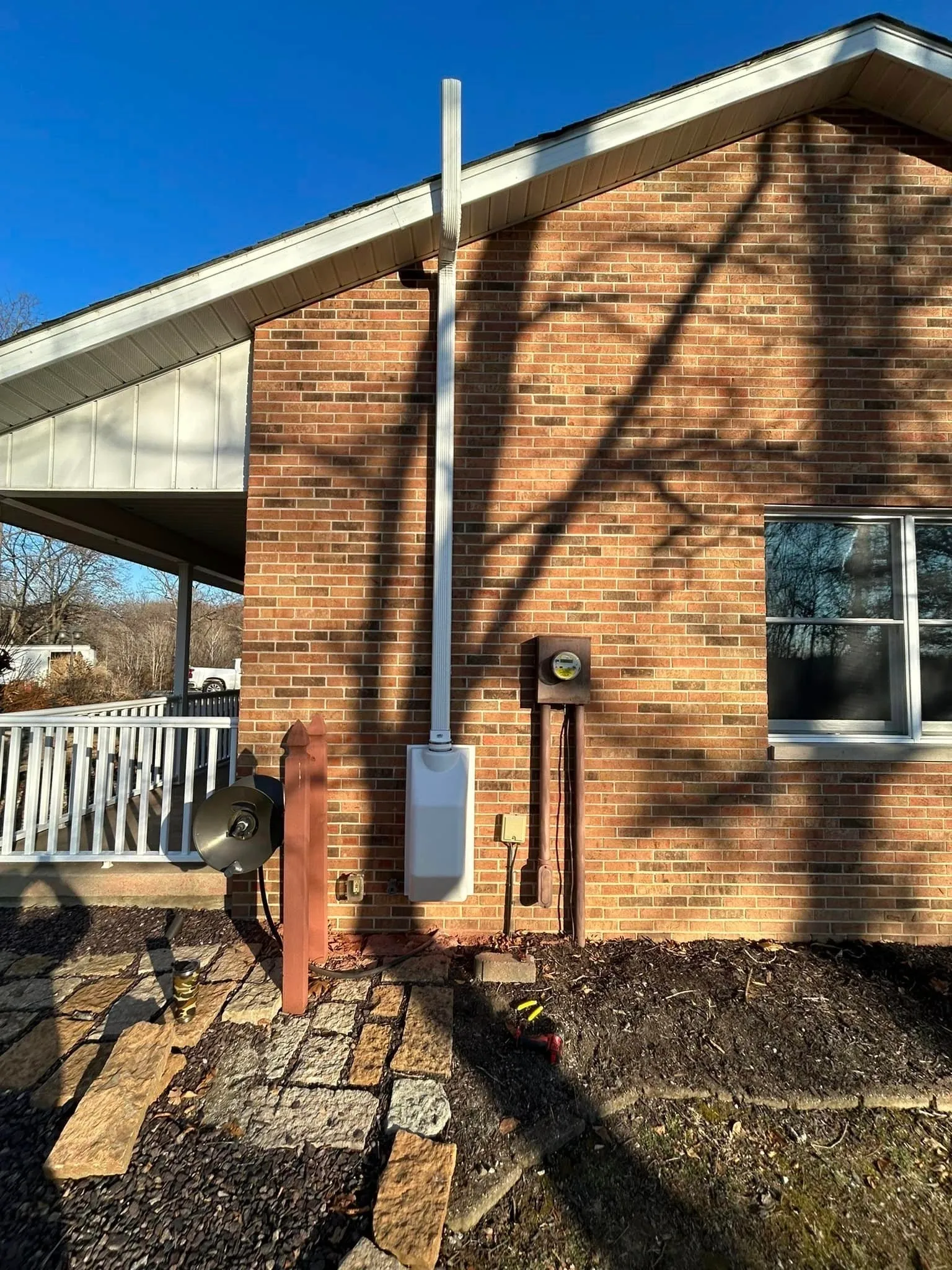
Every mitigation system should include a manometer, which is a simple U-tube gauge that shows whether the fan is maintaining the proper vacuum. Homeowners can check it periodically to ensure the system is working. If the manometer reads zero, the fan may have failed or the vent pipe might be blocked. Regular checks are a small habit that prevents big problems later.
Common Misunderstandings About Radon
One misconception I hear often is that radon is only a problem in basements. While basements are the most common entry point because they are below grade, radon can enter on any floor if there is a pathway. Slab-on-grade homes and homes with crawl spaces are just as vulnerable. Another myth is that newer homes are safe. In fact, modern construction with tighter seals can trap radon inside, sometimes making levels higher than in older, draftier homes.
Some people think that if their neighbor tested low, they are automatically safe. That is not true. Radon levels can vary significantly from house to house, even on the same street. The geology under each slab can be different, and the construction details matter. The only reliable way to know your radon health risk is to test your own home. The EPA recommends testing every two years, and always after any major renovation that affects the foundation.
The Role of Professionals
While a motivated homeowner can buy a radon test kit and do a short-term test, mitigation is best left to professionals. The design of a sub-slab depressurization system requires understanding of soil dynamics, air pressure, and building science. A poorly installed system can be ineffective or even worsen the problem by drawing radon from under a different part of the slab. In St. Louis, companies like Air Sense Environmental specialize in this work. They handle testing, system installation, and post-mitigation verification, ensuring that every step meets EPA guidelines.
I have seen firsthand how a well-installed mitigation system transforms a home. Before installation, the homeowner might have been living with levels of 8 or 10 pCi/L, not knowing the risk. After the system is running, the CRM shows levels around 1 pCi/L or lower. That is a huge reduction in the radon health risk for the family. It is one of the most satisfying parts of this work.
Looking Ahead
Radon awareness has grown, but there is still work to do. The American Lung Association and the National Radon Program continue to push for more testing and mitigation. Some states have started requiring radon disclosure during real estate transactions, which helps. But the ultimate responsibility falls on the homeowner. Testing is cheap, mitigation is affordable, and the benefit is enormous. You are protecting your family from a known carcinogen.
If you have not tested your home yet, start there. Buy a test kit, follow the instructions, and send it in. If the results come back high, call a professional. Do not wait. The radon health risk is real, but it is also manageable. With the right knowledge and the right system, you can breathe easier.